
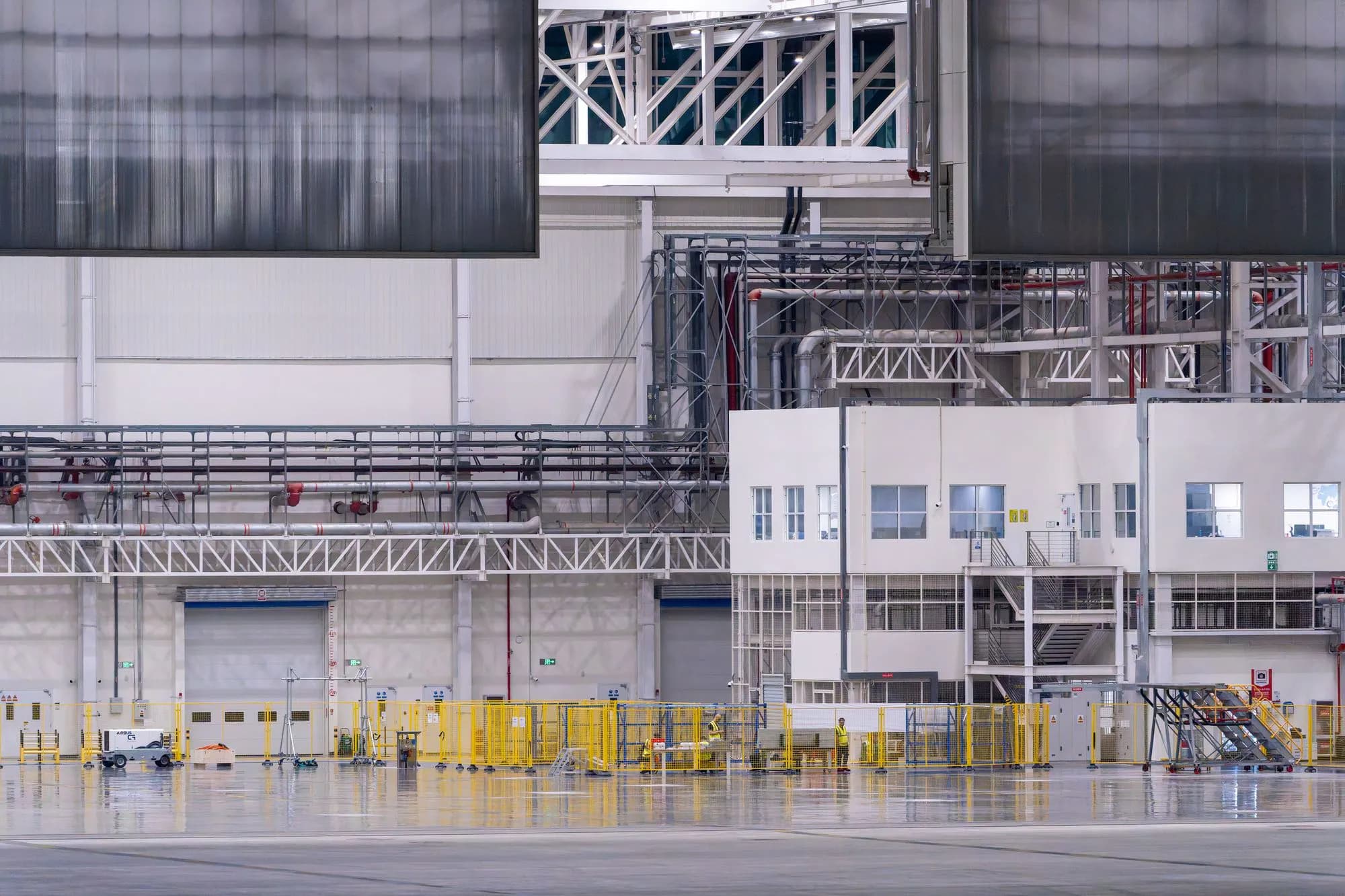
Cold storage is among the most demanding of industrial building types because every element interacts with every other. The insulated envelope, the floor build-up, the refrigeration plant and the power supply cannot be considered in isolation — a weakness in one shows up as cost, condensation or spoilage somewhere else. In the UAE climate, the margin for error is smaller still.
Envelope and thermal integrity
The insulated panels, vapour control and detailing at junctions determine how hard the refrigeration plant has to work and how vulnerable the structure is to condensation. Thermal bridging and poor detailing at doors, penetrations and junctions are common failure points that quietly raise running costs and risk fabric damage over time.
The floor is a special case
- Floor insulation to control heat gain from the ground
- Frost heave protection for low-temperature rooms, where required
- Load-bearing capacity for racking and materials-handling equipment
- Careful detailing at the junction between floor, wall and door
Refrigeration and continuity
The refrigeration system must suit the temperature regime and the goods, but resilience matters as much as capacity. Because stored product is at risk if temperature is lost, power continuity, redundancy and monitoring are central design questions rather than afterthoughts. The cost of a failure is measured in spoiled stock, not just repairs.
In cold storage, the building and the machine are the same project.
References
- Cold storage design references and manufacturer data — verify applicable
- Project-specific refrigeration and structural design
Sample editorial content — illustrative only